
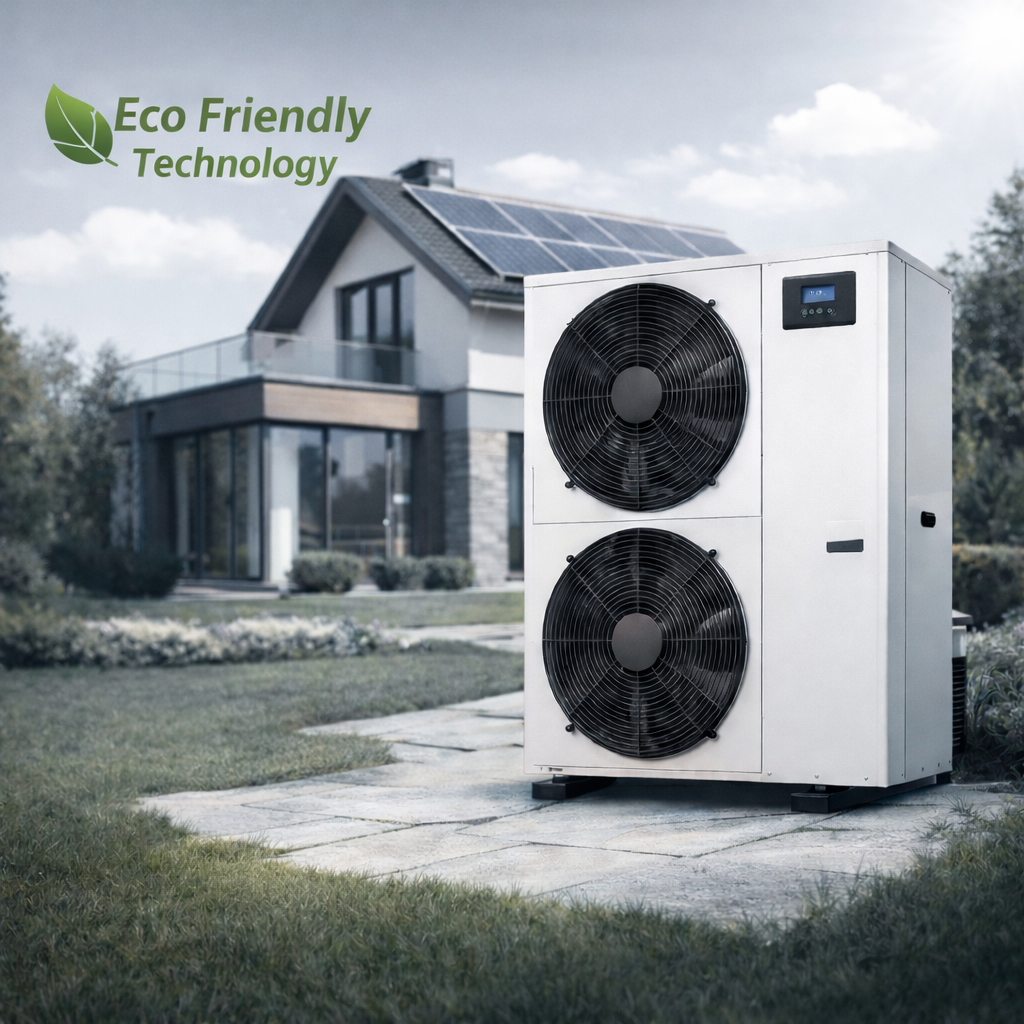
A heat pump transfers thermal energy from the outside environment (air, ground, or water) to heat or cool your space, making it an all‑in‑one system for heating, cooling, and sometimes domestic hot water. It’s highly efficient because it moves heat instead of generating it directly.
Operating Principle: Similar to a reversed refrigerator, a heat pump uses a refrigerant cycle of evaporation, compression, condensation and expansion to capture low‑temperature energy and convert it into useful heat. All it needs to operate is electricity, but it delivers significantly more thermal energy than the electrical input.
Efficiency Metrics: The performance of a heat pump is measured by its Coefficient of Performance (COP) — the ratio of heat output to electrical energy used. Typical modern units deliver COP values from around 3.5 up to ~4.5 or higher under ideal conditions, meaning they can produce 3‑4.5 kW of heat for every 1 kW of electricity consumed.
Real‑World Benefits: With a high COP, a heat pump can significantly reduce energy bills compared with electric resistive heaters or traditional fossil fuel systems. For example, models with COP of 4.0 can supply ~4 units of heat energy for 1 unit of electricity — up to ~75% of the heat coming from renewable ambient energy.
Our Models & Key Features
Like the high‑efficiency CTT heat pumps, our products use advanced refrigerants (e.g., R290), offer energy class A performance, and deliver strong heating capacity with low noise and high seasonal efficiency — including remote control and optimized design for silent operation. Many models achieve COP values around 4+, balancing comfort, energy savings and reliability.